Sustainable Coconut Gathering Indonesia 2026:
Scaling Sustainable Value Chains through Partnership
DIWA attended the Sustainable Coconut Gathering Indonesia 2026, held in Jakarta on 4 May 2026 and convened by the Sustainable Coconut Partnership (SCP). The event brought together government representatives, industry leaders, processors, traders, financial institutions, development partners, and sustainability practitioners to discuss Indonesia’s coconut sector.
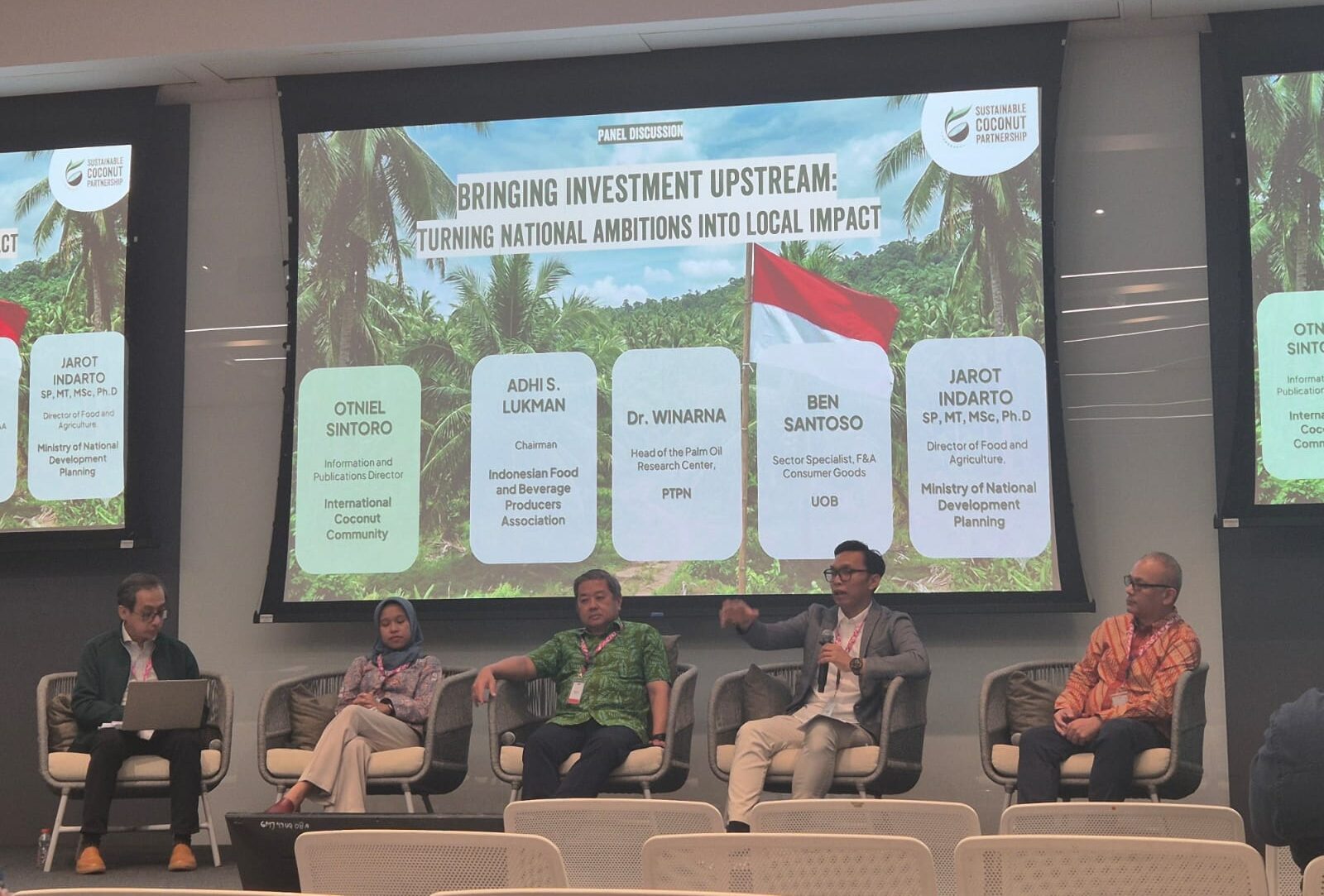
The momentum around Indonesia’s coconut sector is significant. Indonesia remains a top producer of coconut oil, the majority of which is consumed in the domestic market. Indonesia is also a top global exporter of palm oil, a focus of Indonesian industrial policy for many years now. Dr. Kuntoro Boga Andri, Director of Plantation Product Downstreaming at the Ministry of Agriculture, highlighted the importance of strengthening smallholder participation in line the Ministry of National Development Planning Agency (BAPPENAS) Hilirisasi Kelapa 2025–2045 agenda. Discussions from government stakeholders highlighted targeted financing programs, improved transport and processing infrastructure, and investment in coconut processing capacity in high-producing areas. With plans for 6 coconut processing plants to be operational in high coconut producing areas within the next 4 years and with plans for a further 14 should investments materialize.
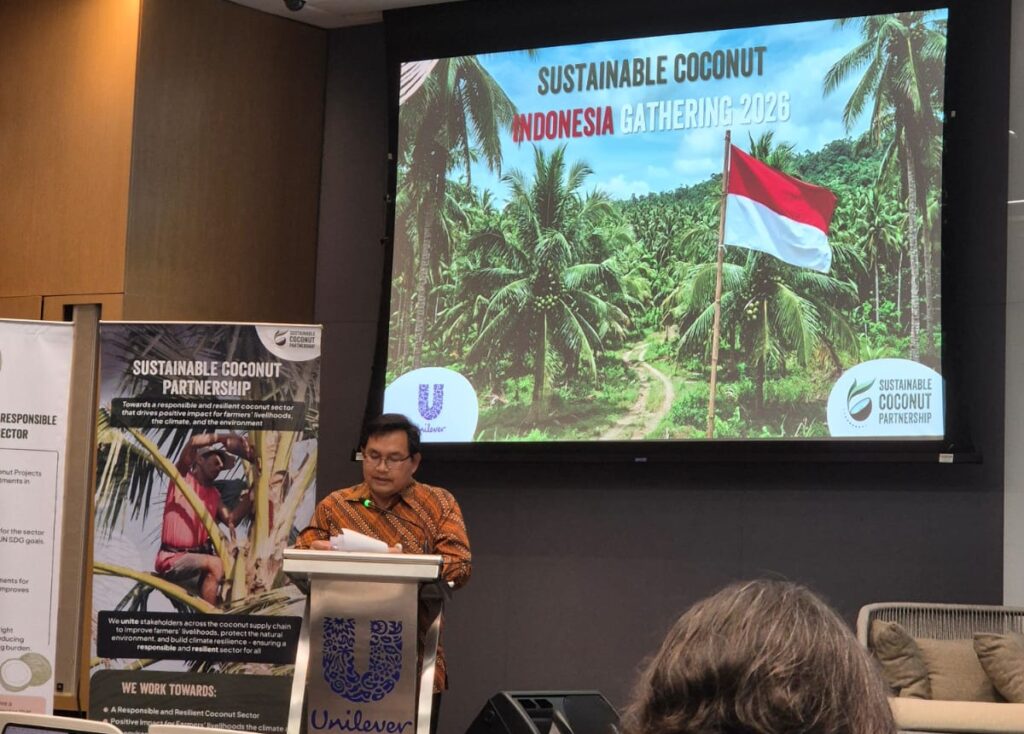
Sustainable Coconut Gathering Indonesia 2026, held in Jakarta on 4 May 2026 and convened by the Sustainable Coconut Partnership (SCP)
Participants also acknowledged the challenges of ensuring that improvements in the value chain effectively reach farmers, sharecroppers, and workers at farm level, and contribute to dignified livelihood and decent work. Access to capital, price volatility, fragmented supply chains, and the weak bargaining power of farmers remain major barriers in the industry, contributing to cyclical poverty among coconut-producing communities, with coconut farmers consistently ranking among the poorest agricultural groups in Indonesia. In many cases, farmers continue to rely on collectors because they offer immediate payment, even where longer-term value chain arrangements may provide greater stability. DIWA’s 2024 rapid HRIA on the coconut industry in the Philippines and Indonesia, commissioned by SCP, remains highly relevant, suggesting that low incomes for farmers and sharecroppers, and low wages for labourers, are central to the sector’s commercial challenges and long-term resilience.
Rejuvenation was also a central theme in the gathering, with the government now incorporating cocoa and coconut into the mandate of PTPN (National Plantation Body). Dr. Winarna, Head of the Palm Oil Research under PTPN, highlighted the role of applied knowledge in supporting productivity and more resilient agricultural systems, but emphasized that the current timeline for development and distribution of optimized, high yield coconut seedlings may take decades.
Unlike palm oil, coconut is often a secondary crop within diversified rural livelihoods, involving smallholder farmers, seasonal labour, sharecroppers, and informal supply chain actors. Sustainability approaches must therefore be adapted to these realities and will require more coordinated multistakeholder actions.
DIWA’s work in the sector points to the importance of centring the conversation re: processing capacity, rejuvenation, and market access on goals for decent livelihood, transparent relationships, and the wellbeing of the farmers and workers at the foundation of the sector.
Kindly reach out to Louisse Borela or Aaron Thirkell to learn more about DIWA’s work in coconut.