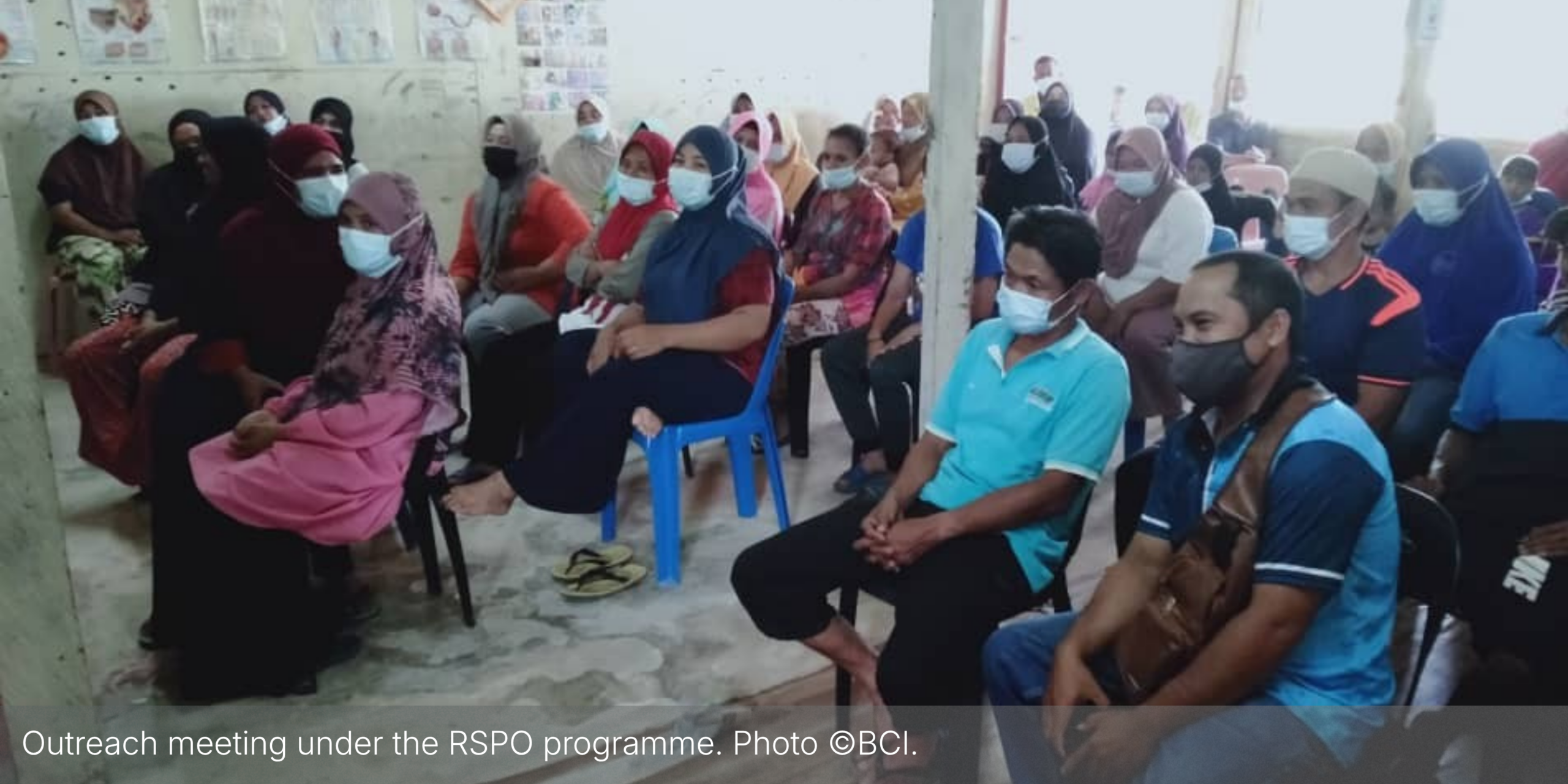
Worker-Centred Alternative Grievance Mechanisms:
Spotlight on Sabah, Malaysia
Grievance mechanisms are a critical part of human rights due diligence. Yet on the ground, many workers still cannot raise concerns without fear of retaliation—especially in sectors and jurisdictions where migration status shapes everyday risk. For International Workers’ Day (May 1), DIWA spoke with Lanash Thanda a representative from Bio Community Initiative (BCI), a Sabah-based organisation. Since 2019, BCI has supported workers in the palm oil industry through an outreach programme that evolved into the Conflict Prevention Platform (CPP): a worker-centred process anchored in a WhatsApp chat service, case documentation, and support for mediation, negotiation, and capacity building.
The CPP’s labour wing operates only in Sabah, reflecting the state’s distinct legal and historical context—and the realities faced by migrant workers in plantations, many of whom are undocumented. In the conversation below, Lanash Thanda describes how workers first learned about the platform through RSPO outreach and how a chat-based channel has become a trusted entry point for support.
DIWA: DIWA has previously spotlighted the work of BCI and the CPP, particularly through the Fostering Fee Accountability and Cost Tracking project (FFACT 2022-2024). This time, we wanted to go deeper: in practice, what helps ensure workers can access grievance channels—and that their rights are protected in the process? Before we begin, could you share your background and how BCI’s work with worker communities developed?
LT: My background is in environmental and human rights law. I used to work at WWF, handling the policy unit for Borneo. BCI has a unique setup in the sense that we internally fund our social work. We did not want to be tied by funders—so we have clients who pay for jobs, and a percentage of what comes in goes towards our work on the ground.
We work with Indigenous communities and worker communities. We were pulled into worker issues partly because of RSPO engagement—around 2013–2014, there were very few organisations dedicated to labour concerns in this space.
We still work with Indigenous communities, but our work has expanded to include worker communities as well. In 2019, when we started the Malaysian RSPO outreach programme, it became obvious that the policies and standards within RSPO were not addressing what was happening on the ground. And from the ground, they wanted our platform to engage with the RSPO member companies. We raised this with RSPO, and about six to eight months before the outreach programme ended in Malaysia, we piloted the Conflict Prevention Platform (CPP) in response to that ask.
We had to split the CPP into two systems—one for Indigenous and local communities, and one for worker communities—because for labour issues, a different way was needed. Many are undocumented, so we have to deal with the situation in different ways.
Since the 2021 pilot, the labour wing of the CPP has taken on a life of its own. The organisations that we partner with are on the ground, so cases of human rights abuse and labour rights violations are coming in fast—and we are at the point where we cannot cope, to be honest.
This is volunteer-run. For the CPP platform for workers, we have a task force that handles incoming cases.
DIWA: How do workers find out about the platform?
LT: In 2019, they were going in to do the outreach, right, to tell people, to tell the worker communities about what RSPO is. Is your company an RSPO member? And if they are, then these are your rights. That is how it evolved. We managed to get the union on board; they did a very good job. But then the workers themselves took it over and they set up a WhatsApp group. That WhatsApp group now has nearly 200 worker representatives.
We trained the group on how to handle cases. And then from the WhatsApp group, they have actually formalised their group. The bulk of the community that are on the WhatsApp group come from Sulawesi. We have two WhatsApp groups. I think it is due to the ethnic situation. We have one that is the Sulawesi group and then there is the Timorese workers. The Sulawesi group is a lot more aggressive in a way. When a case comes in, either they take it on or if they cannot handle it, then they come to the CPP task force.
We still work very closely with the union [Sabah Plantation Industry Employees Union]. Initially, they took on many cases that came through the platform. Over time, they found that many cases involved non-union members, and they have shifted to focusing primarily on union members for now. However, we still work very closely with them, and they advise us a lot.
Most plantations in Sabah do not have a union. There are a few, but most do not. Actually, another good outcome from the RSPO outreach programme was that some RSPO members approached the union and invited them to come in, so that was a positive process, as well.
DIWA: Can you talk about the kinds of reports that come in.
LT: One of our more experienced panel members says many cases are “basic” cases—mainly pay. I would say these often sit within forced labour indicators. They come in framed as a pay issue: workers are not happy because what they are receiving is not what they were promised. They know that their pay is supposed to be minimum wages but their agreement with that company is not based on minimum wages. It is at the point where they want what they were promised.
When you dig deeper, then you find that the issues are larger and systemic, and there are forced labour indicators. That is not how the workers are seeing it. Because most workers do not know their rights, especially the undocumented workers. That is the problem.
Our partners on the ground, they are called Sahabat Migrant Indonesia (SMI). They have formalised their group in Indonesia. They are a union in Indonesia now, but they cannot take on cases in Malaysia; their union is not legally allowed in Sabah. So, they are looking at trying to ensure that workers, before they come over here, are trained; that they understand their rights better before they come to Sabah. So that is the direction that they are going in.
We have had some trans-boundary issues as well. CPP cannot go over to Kalimantan [Indonesia]. So that is why they have decided to try and set up an office there, although they are not sure how they are going to handle the funding and all those things. Remember that this group are all also workers from plantations. The majority of them here are very active on the WhatsApp group.
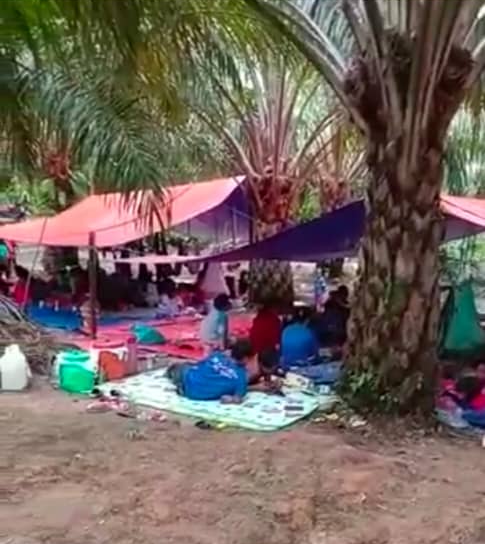
Undocumented workers were told to camp out in a remote part of the plantation during an audit in 2023.
Photo sent via Whatsapp to the CPP Labour Task Force.
DIWA: What is the process for handling a report?
LT: If there is an issue, we will discuss in the WhatsApp group. We have noticed that when we have a Sabahan like BCI, overlooking the process, the agencies cannot say no. We keep pushing them, like, what is happening here? Why is the person still not being paid or, you know, those kinds of things. It is like a check and balance.
When a case comes to us, we investigate, then summarise the case ensuring the local labour laws are addressed then send them the case document, especially if it is a non-RSPO member. If it is an RSPO member company, we take it on with the RSPO company directly.
DIWA: If it is an RSPO company, does BCI somewhat step in to help with negotiating or the capacity-building that is needed for that case?
LT: Yes. There are some companies where there’s good relationship between workers and their superiors and the estate managers and all that, right? So, we build capacity within that workers’ group to have discussions with their superiors and the estate manager. That is one way. There are other cases where there’s really, really bad relationship. Then BCI has to step in and formalise the complaint through the conflict prevention platform to de-escalate the issue.
It depends on so many aspects. We also have a lot of cases that have not gone through when the worker pulled out at the last minute because they dare not go through the process, right? Most of the cases are coming from undocumented workers. If it is an RSPO company, it is easier to engage with them. If it is a non-RSPO company, then it is a totally different matter. Because we’ve been dealing with this since 2021, we’ve had a lot of learning experiences, so we know how to handle the non-RSPO cases as well. Usually, we work very closely with the consulate.
In a way, we are trying to build capacity within SMI. That is what we have learned since 2019; It is not only the organisation that carries out the work. It is individuals who are very passionate who will take on cases.
DIWA: Can you describe a conflict that BCI helped to resolve, especially this idea of formalising the complaint to deescalate. Could you give an example of what that means?
LT: I can give a few examples with some RSPO members, and then some examples that are not RSPO members.
One case involved an RSPO member that had not paid their replanting contractors, who were foreign workers, for 6 to 8 months, if I am not mistaken. In a meeting with some of our Task Force members the consulate was wondering how to resolve it because they had engaged with the company, but the company was giving all sorts of excuses. We gave them advice. And then to follow up, we co-wrote a letter, including that BCI is observing the process, and that we are a member of RSPO. The following day the company made half the payment, whatever money they had on the estate. They made the initial payments and then they asked for a delay because they were waiting for money to pay up for the rest of it. So that was one of the fastest moving cases that we have had.
Then there was another one. Let me think. Okay, so another RSPO member, the person was injured. He had been working for seven years; he was diagnosed with a medical condition requiring specialised hospital-based investigations and treatment. Although the plantation had an on-site clinic, the facility was not equipped, right? There were medical referrals to go to the nearest hospital, a government hospital. The nature of the complaint was refusal of the employer to bear medical expenses of the employee, so there was a contractual breach, there was procedural breach. The employer’s justification was the illness is non-occupational, therefore [there is] no obligation to bear cost.
Their HR department as well had informed the Indonesian consulate that the employment contract is confidential and had refused to provide the contract to the consulate. This is the RSPO member. So, actually, the case had gone to the consulate and to the CPP. CPP stepped in, we contacted the HQ and we asked for immediate issuance of a guarantee letter for the government hospital. We requested for reimbursements and for the provision of the worker’s complete employment contract, to be given to the Indonesian consulate.
DIWA: And then what happened at the HQ level?
LT: They were able to get the estate to move on the issue.
DIWA: Why do you think that the CPP is a platform that workers are choosing to use.
LT: I think it is because it is easy. First of all, it is an external group. The pointpeople are someone they trust, and they have met the panel members. They have met the task force, so they know us.
They do not have to fill in forms. They know that they can just WhatsApp us and ask us for advice and we will give them advice.
If they text us personally, then we will give them the advice personally, but then one of the committee members will share that information as a more general piece within the broader audience. So, they can also learn about their rights.
Number one is building their knowledge of their own rights. That is one. The second thing is trying to get them to be brave because there is a lot of cases that come on board that we cannot do the follow through because they are not brave enough.
DIWA: Would you like to share an example of a case like that?
LT: Yes, so like, for example, there was a group of people that all had the same problem, but most did not take it on because they were scared that they would lose their job. However, one person came forward. As of this year, the Malaysian Immigration is enforcing a rule that is actually a very old rule: no extension of immigrant worker contracts after 14 years. And a lot of the companies are not paying any compensation [severance]. So, this person was willing to come forward to take the case, but there are others who were not willing to do it.
Because of the 14-year period, officially she was asked to leave. But unofficially, the company kept her on, undocumented. But then, a new manager came on board, and said, if you are undocumented, you have to leave or you have to go and work in the plantation at lower pay. The current minimum wage is RM1,700 per month. They wanted to pay her something like 35 ringgit a day [equivalent to ~RM910 per month.]
And this one is a non-RSPO company, so we had to work very closely with the consulate. In that case, the consulate handled all the negotiations. In the end there was a discussion, she got compensation and she left.
DIWA: It takes a lot to bring a complaint. The CPP is such an important mechanism because it has the trust. What else is needed to ensure that workers can raise an issue safely?
LT: We have been approached by some supply chains asking to pilot the CPP in the supply chain. But then when we sat down and thought about it, because when you see your supply chain, we already know where your human rights issues are going to be. The question that we asked the supply chain was: Are you ready to handle the bulk of cases coming in? And they knew they were not ready. For now, it all looks good on paper, but on the ground, it is a different matter.
The EUDR due diligence process, we see the value, but we have not discussed the how.
There are huge systemic issues within all these companies. There is a case we really wanted to take on. But we could not because the workers that had left are now undocumented. They did not dare to take the case because they were also scared for the families that were still working in that plantation.
DIWA: Can you elaborate on the nature of the case?
LT: Yes, so 40 workers walked out of their jobs. They were documented. And when they left, they left only with their passports, and they moved to another company. And so now they are working as undocumented [workers]. They dare not, they are not brave enough to take a case against their previous company, because they have family there. So that is the retaliation that they are worried about.
It was because the worker representatives were brave enough to stand up to the supervisor or the estate manager, right? The worker knew his rights from this outreach program and joining the CPP, joining the SMI group. So, he vocalised these issues. And then he was transferred to a new space. And then he was not paid what he was promised.
Even though he worked six days a week, on the pay slip, it indicated that he only worked three days a week. And that person did not have the proof, the paper proof to push this issue. Because he has family members there, he chose to leave with 40 other workers instead of staying and continuing the fight.
The grievance process within the companies is not working. Of course, there are other ways to handle it, right? But for us to handle it, then we need to take that case and do a headbutting session with the RSPO member.
But then this person was worried for his family members, who are also getting the repercussions of that fallout; because he dared to stand up to his supervisor.
DIWA: You mentioned that part of the role of the CPP is to try to educate workers and also asking people to be brave. What can be done to bring cases to light in situations like that where people are at real risk of retaliation?
LT: Actually, what we what we found was that during the outreach program, people were a lot more able, because there is that momentum, which has stopped since 2021.
But I guess the reason the workers’ platform is so much more active and, in a way, more successful than the indigenous community platform is because of the engagement of people on the ground.
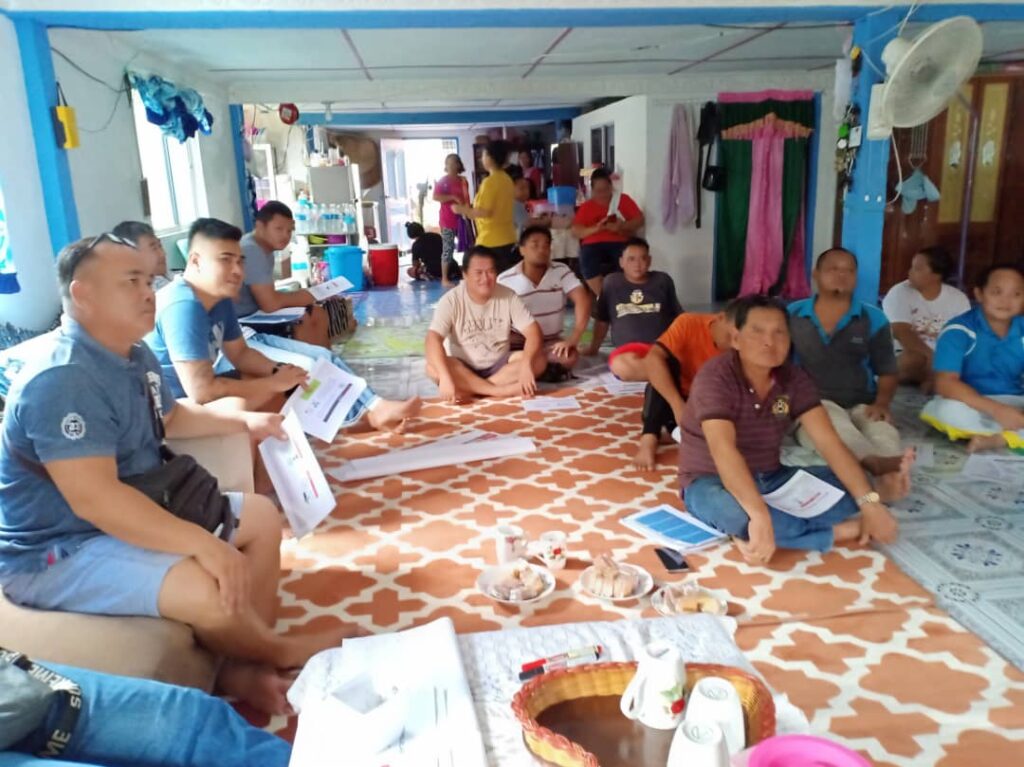
Worker representatives in a CPP meeting; Photo ©BCI
DIWA: Would you say that their participation with the CPP may have also helped them in terms of being active in a workers’ committee, more internal mechanisms for grievance or liaising with management in some capacity?
LT: I’m not sure, unless that particular individual or that representative knows how to manoeuvre. You see it with the worker committees as well. It works if the platform is a level platform and if the individual is strong enough to counter all the nonsense from their supervisors and their bosses, right? Otherwise, it is not going to work.
You have a committee. It is a tick box. Yes, we meet once every two weeks or whatever, but that is about it. You talk about normal stuff, okay, there’s electricity, there’s water. But the deeper issues will not be brought up in that committee.
In the early days of RSPO, when the gender committees or the women’s committees were set up, there was very vigorous training in Malaysia that Tenaganita [an NGO] used to do with companies to make sure that the gender committees would address, you know, issues like sexual harassment. But then it has been eroded into something else now. So, there may be those committees, it is there, but it is non-functioning.
And we have never had a repeat of this kind of program, the companies ensuring that, you know, it is independent, their voices can be heard. Your boss is there, who is going to talk?
The union, the SMI group, our partners who handled the indigenous community issues, they all agree that the outreach program brought up a lot more issues and they were able to help. But then then the momentum dies off. People are short on funding and then they say, okay, forget the outreach program, let us do something else. But ultimately, if you want to address the root problems, you do need the outreach program for the stakeholders to understand their rights. You need that outreach program to bring all those issues to the surface.
And if you do not have that, then you know what, your supply chain looks fantastic.
DIWA: They receive no complaints and it looks great?
LT: Yes, exactly.
— With contributions from DIWA’s Melissa Villanueva and Kamini Visvananthan.
This interview has been edited for clarity, brevity, and organization.
The views and opinions expressed in this interview are those of the resource person and do not necessarily reflect the views and opinions of DIWA.
For more about BCI, please contact: Lanash Thanda
Learn more about FFACT here.