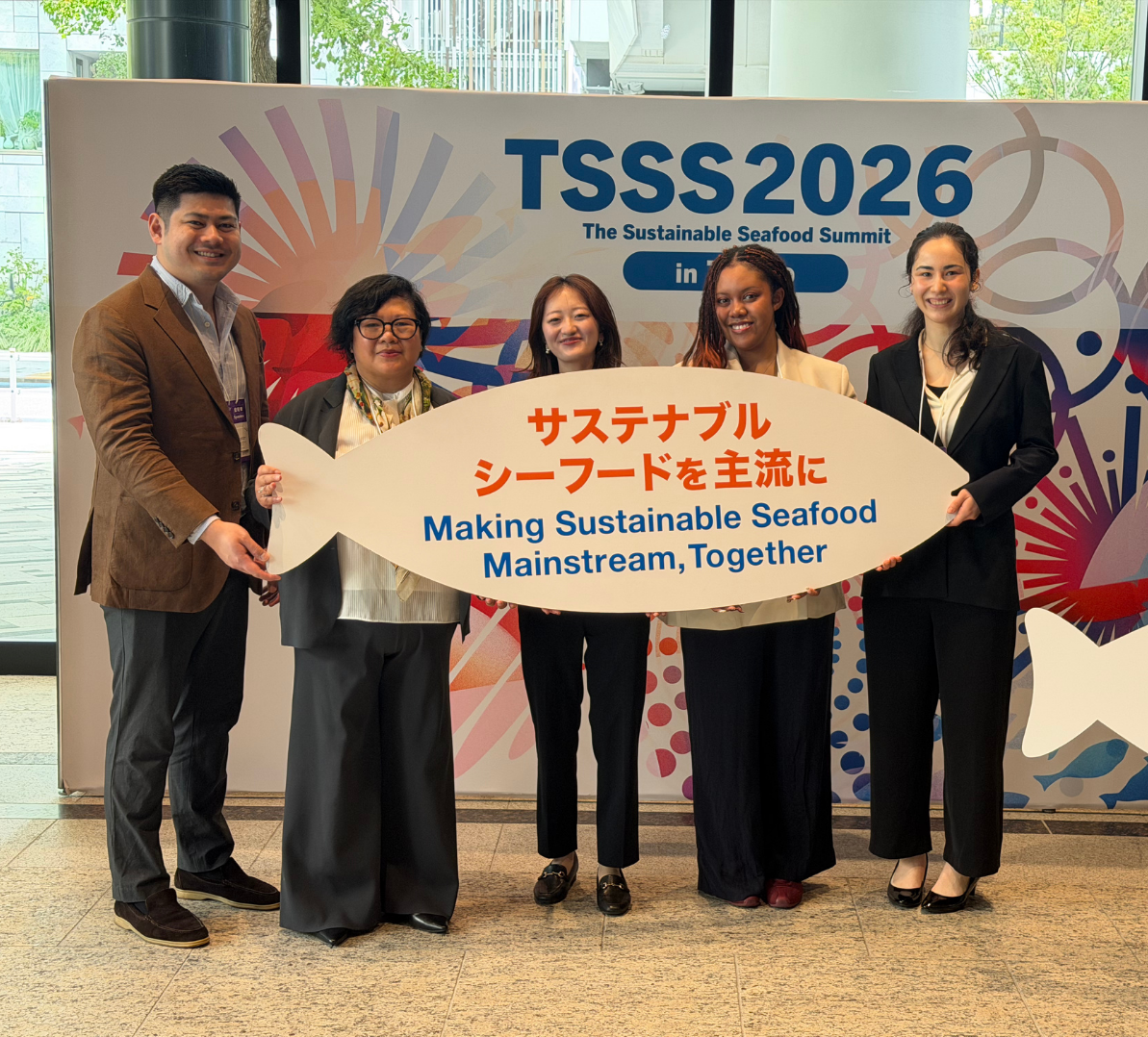
Report: DIWA’s Participation in The Sustainable Seafood Summit 2026
Dignity in Work for All (DIWA), led by the DIWA Japan Country Office, participated in the The Sustainable Seafood Summit (TSSS) 2026, held in Tokyo, Japan, on 21–23 October 2026 under the theme Resonating Actions, Scaling Impact. The summit brought together stakeholders from industry, government, civil society, and finance to explore how to make sustainable, equitable, and accountable seafood the mainstream choice.
DIWA’s engagement included showcasing DIWA Japan’s work through a booth exhibition, soft-launching a paper on Human RIghts Impact Assessment (HRIA), and DIWA’s Panyarak Roque participating as a panelist in the session “The Voice of Dignity II: Addressing Human Rights Risks in Supply Chains.”
Other highlights included DIWA participation in a meeting organized by the Conservation Alliance for Seafood Solutions (CASS) re: the Ethical Tuna Collaboration and bilateral meetings and networking with representatives from more than 40 organizations.
Discussions focused on the need for stronger supply chain traceability, regional cooperation, responsible procurement, and greater integration of human rights into seafood sustainability initiatives. While environmental sustainability has gained traction through certification schemes and industry initiatives, labor rights and human rights remain insufficiently addressed.
For DIWA, the summit provided valuable opportunities to strengthen stakeholder relationships, identify potential collaborations, and inform future research. Key reflections included the need to increase the visibility of labor and human rights issues within the seafood sustainability agenda, engage stakeholders in their own language, and demonstrate measurable outcomes, particularly in worker-centered remediation and recruitment-fee repayment.
Key Takeaways:
- Convergence of human rights and environmental sustainability: Move beyond approaches that treat them separately and promote more holistic frameworks that address both environmental impacts and workers’ rights. Often, the approach and tools used for environmental due diligence and HRDD are similar, and both can be done synergistically – particularly supplier assessment, engagement, and development. Undertaking environmental due diligence and HRDD separately increase the costs of due diligence and supplier fatigue. In some areas, for example IUU fishing, human rights and environmental impacts are mutually reinforcing and require collaboration and concerted efforts between the two sustainability movements.
- Strengthen traceability and accountability: There was extensive discussion at TSSS on traceability and data disclosure. In particular, the Taskforce on Nature-related Financial Disclosures (TNFD), a voluntary disclosure framework, focuses on nature-related dependencies, impacts, risks, and opportunities, including biodiversity, water, and ecosystems. DIWA staff noted that discussions on traceability often lack sufficient attention to human rights and labor-related considerations. Consider ways to contribute and integrate human rights and data disclosure, for example through the Taskforce on Inequality and Social-related Financial Disclosures (TISFD), a developing framework to strengthen the disclosure of social-related impacts, risks, and opportunities, with its final framework expected to be published in 2027. This kind of development could increase corporate and financial-sector attention to social-related risks and disclosures. However, existing traceability systems and transparency must also lead to meaningful action.
- Promote ethical recruitment and responsible procurement: Encourage buyers to adopt practices such as long-term contracts, cost-sharing, and volume guarantees that support ethical recruitment and remediation.
- Prioritize worker voice and measurable impact: Strengthen trusted grievance mechanisms and worker-centered remediation, while tracking outcomes such as recruitment-fee repayment and supply chain coverage.
- Deepen regional engagement and collaboration: Strengthen engagement with underrepresented Southeast Asian supply chains, particularly those involving Indonesian workers on Taiwanese fishing vessels, and build cross-border partnerships.
- Build long-term trust and demonstrate value: Maintain sustained relationships with industry stakeholders, communicate labor and human rights issues more effectively, and demonstrate DIWA’s contribution through tangible, measurable outcomes.
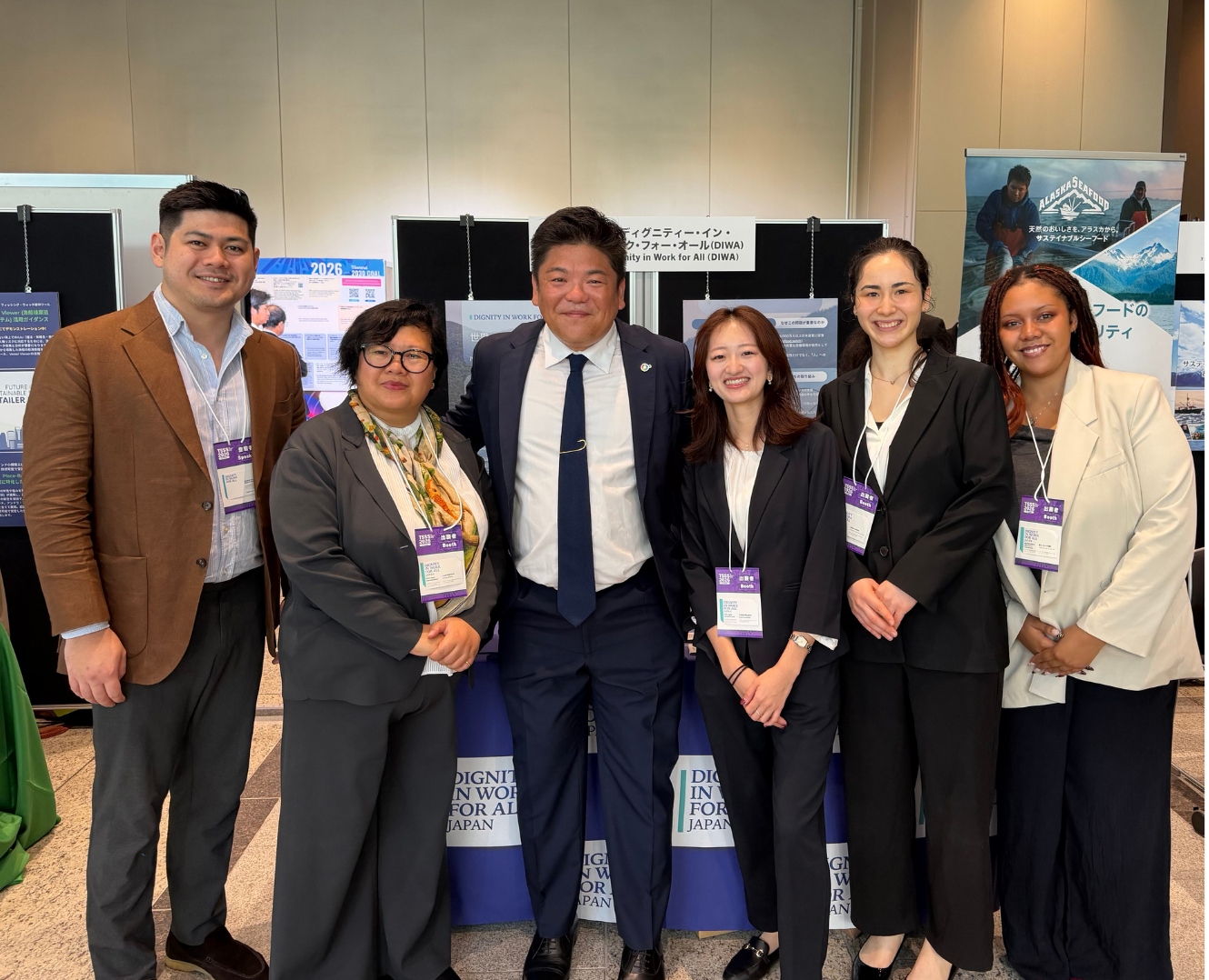
Representatives of Dignity in Work for All and Seafood Legacy at the DIWA booth at TSSS 2026.
No single stakeholder can address these issues in isolation. A siloed approach has repeatedly failed, therefore, there is a need for multi-stakeholder collaboration and relational innovations in the industry, towards the restoration of the oceans and marine life as well as ensuring people and community rights are respected and upheld.
DIWA extends special appreciation to our valued partner, Seafood Legacy, for their leadership as a movement orchestrator of this important summit and for advancing collective efforts to build a more sustainable and responsible seafood industry.
The next TSSS will be held in Tokyo, Japan in October 2027. Planning for DIWA’s engagement will come in due course.
For more on DIWA’s work on seafood in Japan, please reach out to Lowie Kawasaki ([email protected]).