HRDD in Malaysia’s Human Resources National Conference
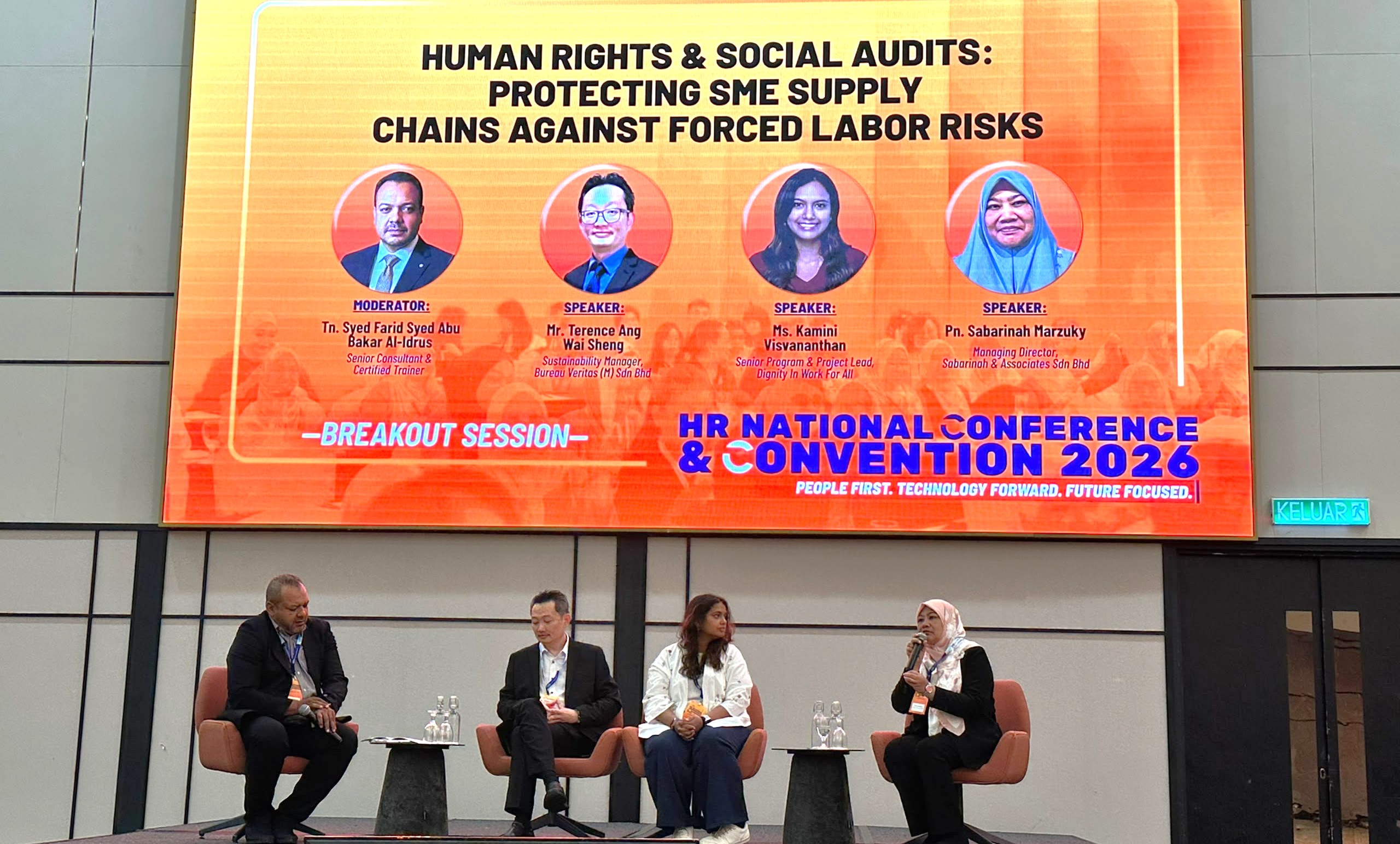
DIWA’s Kamini Visvananthan participated as a panelist in Breakout Session 2, “Human Rights & Social Audits: Protecting SME Supply Chains Against Forced Labour Risks,” at the HR National Conference & Convention 2026, organized by the Malaysian Employers Federation (MEF) in Kuala Lumpur on 18 August 2026. The conference brought together approximately 2,000 human resource practitioners and industry representatives from across Malaysia to discuss emerging workplace challenges and responsible business practices.
During the session, Kamini contributed to discussions on audit readiness, migrant worker welfare, third-party labor vendor accountability, and the growing expectations placed on businesses by customers and supply chain partners regarding human rights due diligence (HRDD). Drawing on DIWA’s experience working with employers, workers, and supply chain actors in Malaysia, Kamini shared common labor rights risks observed in workplaces, as well as practical examples of good practices that businesses can adopt to strengthen worker protections, improve compliance outcomes, and boost collaboration among stakeholders.
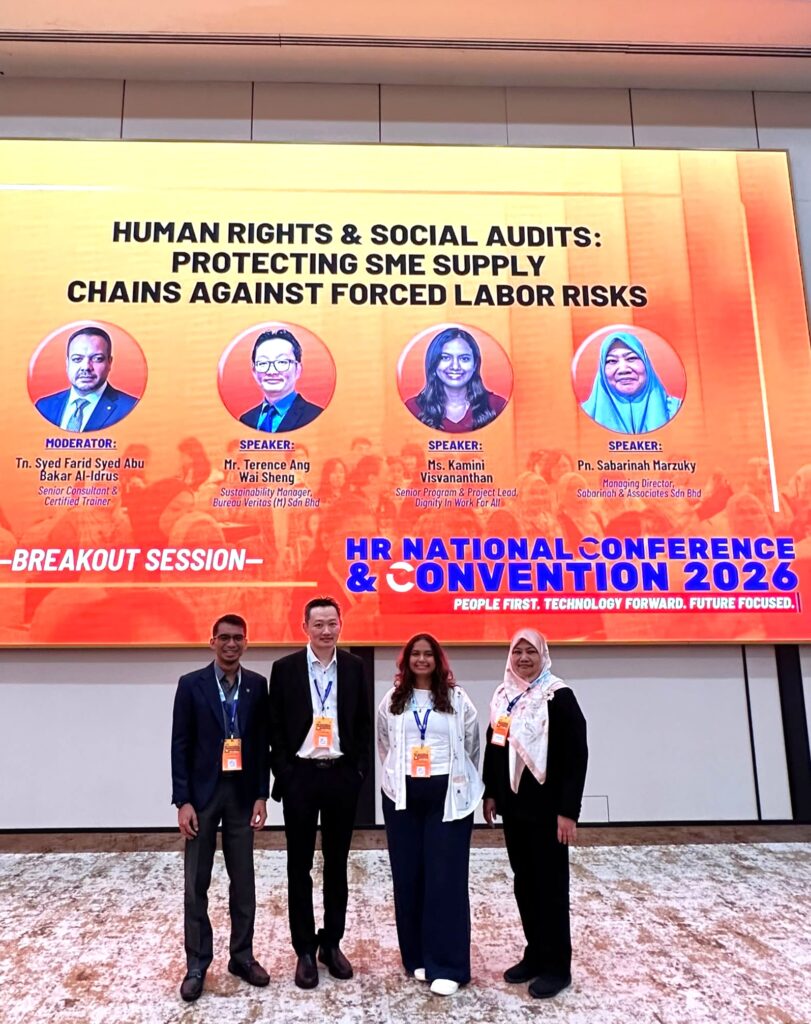
DIWA’s Kamini Visvananthan stands with fellow panelists Terence Ang Wai Sheng of Bureau Veritas and Sabarinah Marzuky of Sabarinah & Associates, along with moderator Syed Farid Syed Abu Bakar Al-Idrus, during the session on Human Rights & Social Audits: Protecting SME Supply Chains Against Forced Labor Risks.
Key Takeaways from the Discussion
The discussion highlighted the increasing importance of HRDD as part of business risk management and supply chain sustainability. Panelists shared common audit findings related to migrant worker recruitment and accommodations, emphasizing that many compliance gaps can be addressed through stronger oversight, improved documentation, clearer worker welfare policies, effective grievance systems and sustained engagement with labor providers.
The session also reinforced that SMEs face heightened expectations from global buyers and customers regarding forced labor prevention and responsible recruitment practices. As such, organizations should adopt a management systems approach that proactively identifies, assesses, and mitigates human rights risks rather than relying solely on periodic audits.
Panelists emphasized that worker welfare is a shared supply chain responsibility and that ensuring ethical treatment of workers cannot be outsourced. Businesses throughout the supply chain benefit from the contributions of workers and therefore have a collective duty of care to uphold fair recruitment practices, decent working conditions, and responsible employment practices. A recurring theme throughout the discussion was that accountability for worker welfare extends across the supply chain, requiring collaboration among employers, labor vendors, customers, and industry stakeholders to ensure workers are treated with dignity and respect.